Fifty Years of Wedded Bliss….

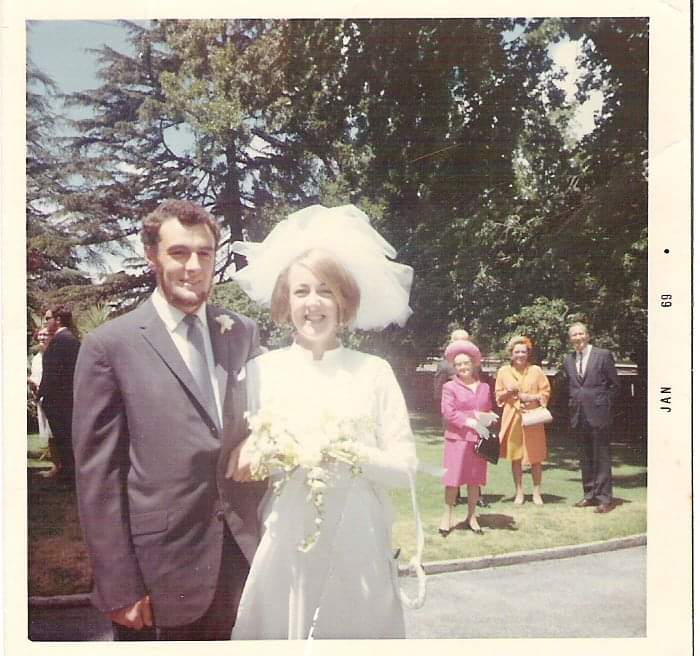
Today is our Golden Wedding Anniversary. At noon on January 11th 1969, at St John’s Anglican Church Launceston, Alison Margaret Padman was joined in holy matrimony with Michael Rex Schwabe . Goodness we looked so young. I was 22 and Mike 1/3 his current age in years.
There’s a wonderful organ in that church, and we suggested to the organist Lindsay O’Neill that Bach’s fabulous Tocata and Fugue in DMinor would be stirring for people to enjoy, but he flatly refused, so we settled for the totally traditional Mendleson’s Wedding March and Henry Purcell’s Trumpet Voluntary instead. Perhaps he knew what he was doing, really. He played superbly as ever.

Some jottings from the event:

  • Four days before the big day my engagement ring flew off my cold hand as I stood up to leave the beach late afternoon. It took about 3 hours to find in the dry sand at the top of the beach, with the aid of several nearby campers who brought torches to help us find it in the gathering dark.
  • Three days before the big day, I had my hairdresser do a practice run of how my hair was to be that day. She trimmed the back a little, prompting a major row between us on the way home from dinner with country friends. It prompted me to stop the car on the highway at Prospect, saying: “…and if you think I’m going to marry a man who complains any time I have my hair trimmed, you’ve got another thing coming.” I picked up my handbag and began walking. I got home safely with Mike patrolling by car all the way – he would never have stopped though, and I’d never have got back in that car! From about 2am when I got home, I tossed and turned for hours. Mum looked worried and commented at breakfast that if I didn’t get in a couple of early nights I’d look a total wreck on saturday. She had no idea I had already begun to mentally compose a note to go with all the returned wedding gifts! I decided to give it a little more time before dropping the cancel everything bombshell …. MIL Dawn could tell Mike was in a bit of a state, and counseled her son with some common sense late that morning, and we cleared the air with a good talk that afternoon. Years later I eventually told the parents how close it all had all come to being cancelled!
  • The wine and champers flowed freely at the lovely buffet lunch reception at home.
  • One of Michael’s aunts was seen disappearing into the hydrangeas with one of his professional colleagues, presumably to discuss Dad’s garden…
  • A female guest our age climbed the oak tree which seemed a good idea after a few drinks, but lost her nerve and had to be rescued by her husband and a mate.
  • The barman lost his shoes but they were located next day in the laundry of the house at #10, two doors along – this has never been explained!
  • Mr Keetley the caterer excelled himself, and the croquembouche he produced for dessert was a real hit.
  • MIL Dawn baked the traditional fruit wedding cake, and we kept the top layer for the first christening 3 years later. It was still good.
  • My bouquet had flowers from Dawn’s garden and Dad’s.
  • The real horseshoe shown in this pic was covered in satin ribbon, and slipped over my arm by Dawn as we walked back down the aisle as man and wife.

It was a memorable beginning to a marriage that so far has taken us 50 years forward. Lots of memories of highs and lows, sad and happy events, easy times and difficult times, and lots of interesting people and places. We thank everyone who is helping us celebrate today, even though perhaps half those who were witness are no longer with us, and many dear family and friends are scattered around the world. Life is a rich tapestry indeed !!!?

Lunch At School, 2

Did you have lunch at school when you were young? If so, was it similar or different to when I was young?

In a previous post I wrote of my early lunch at school experiences at Trevallyn State school. In 1954 we moved across town to #6 Bifrons Court in East Launceston, and I began Grade 2 at Broadland House, a private girls school run by the Anglican Church. The back entrance to the school is just down at the bottom end of this cul-de-sac street, so of course the lunch-at-home routine including lunch at school one day a week continued, with me taking the same sandwiches. But things were changing.

WWII had brought near-starvation to the millions of Europeans caught up in it, and on both sides of the conflict key foods were controlled by rationing via government issued coupons; and for all parties maintaining adequate nutrition in difficult circumstances was an important element in survival. Australians’ food was rationed in support of the war effort in Britain. Food rationing in Australia ended in 1950. Also in that year the Australian government announced a free school milk scheme to provide a 1/3 pint of milk daily to all primary school children, following a 1944 study showing Aussie children were consuming less than the daily recommended doses of calcium for healthy bones.

With this background, and with no close corner shop where girls at the school could buy lunches and drinks, it was inevitable that the school would take some action. In 1957 or 1958 the school began providing Oslo lunches a couple of times a week. I think they were assembled by parent volunteers, maybe on the school premises somewhere, but I can’t imagine that was in the busy school kitchen where the school’s boarders were catered for.

These bagged Oslo lunches were ordered and paid for in advance, possibly the day before, and we collected them from the school hall at lunch time. I remember a brown bread roll, a foil-wrapped triangle of cheese, carrots and fruit. I doubt lettuce was ever in ours because in my youth lettuce was highly seasonal, and it’s appearance signalled the end of the school year was approaching. Christmas came shortly after we broke up, and then we had 6-7 weeks of summer school holidays. I remember trying at least one Oslo lunch and didn’t like it much – probably too much of an onslaught to my tastes. Maybe most of the girls didn’t particularly like that kind of meal either, though to Aussies today it fits right in with simple means most of us eat at work or during a busy day. For whatever reason, the Oslo lunches didn’t last long, which might have been due to some logistics problem, but I went back to weekly egg sandwiches.

However, providing the Oslo lunches at school was a sign of things to come: about a year later the Parents and Friends Association organised a school tuckshop service through which we could order lunch every day of the school week. The menu included cold meat (polony) and salad rolls, meat pies, sausage rolls, fruit and some cakes. I’m not too sure about what drinks were available but I’m tipping small bottles of fizzy and perhaps flavoured milks. In the classroom, before going to each morning’s school assembly, we wrote our name and order on a brown paper bag and put the money inside. A box containing the orders was taken down to the tuckshop, and 3 1/2 hours later the orders assembled by rostered volunteer parents were ready for each girl to collect. There were always a few extra pies and rolls for late arrivals or girls who forgot to order, but you had to be quick.

This school lunch system prevails around Australia today, unless you take your own lunch. Schools prefer their students don’t leave the premises during lunch break unless they are going home for lunch – but most parents these days are not at home at lunch time. And as the couple of months either side of the long summer holidays are still hot in most of Australia, many parents prefer to have their kids eat properly chilled and heated food straight from the tuckshop. Usually run by Parents and Friends volunteers, typically the tuckshop earns revenue for programs supporting the school, anyway. It’s a long time since I was in a school tuckshop as either student or parent, but I think it’s a great system, which can respond to community trends and help educate and promote healthy food choices.

Play Lunch And Lunch at School, 1

These days many kids are delivered to school and activities, but in my day we kids, even the little ones, walked most places. Most families had no car, and those that did generally had only one (doctor’s families being the main exception I think) so if it was close by it was strictly Shanks’ Pony; but then we were never sent very far until we were able to manage catching a bus, or maybe two, to get where we needed to go. We walked to school; we were sometimes sent to the local shops (butcher, grocer, newsagent and post office) and we played with the kids we were friendly with in our street. If everyone was out or away, we kept ourselves amused at home.

If we didn’t have a big sister or brother to go with us, we walked with a friend of the same age. Caroline and I were the same age, from the same street, and our parents were very close friends. Aged just 4, we each began preschool in St. Oswalds church hall on Trevallyn, run by Mrs. Kerr. To get there we walked along our house on Forest Road, across a creek and up onto Trevallyn Road, where we had to cross this busy street; we then walked up the steep laneway beside Gran’s house (#51) and along Bain Terrace to the hall. As we reached the top of the lane one morning, some big kids leaped over a fence and began hitting and punching us. I rolled right down to the bottom of the hill, landing with skin scraped from my forehead, nose, chin and knees; and somewhere along the way lost my little school satchel with my play lunch in it. I don’t remember whether Caroline was hurt, and only vaguely remember that Gran or someone from her house sorted us out and got us safely to preschool. Mrs. Kerr and Gran probably both phoned our parents, because I remember Dad storming out of the house that evening to visit the parents of those bullies. We were never set upon again.

I remember losing my play lunch – perhaps one of those big kids took it, threw it away or ate it. The notion of having a little food during mid morning school recess seems universal, but calling it ‘play lunch’ varies around Australia, according to family and friends surveyed. It is still in use in some places, in others it is ‘little lunch’ or ‘a snack’. Our grandkids are all young Americans for whom ‘snacks’ covers all things eaten between meals. Play lunch was sometimes an orange or a banana, but usually an apple, of which we always had a box at the back door. Apples were cheap and the most common ‘snack’ we had.

Preschool was just mornings. But after that came primary school with classes from about 8.45 to 3.30, just as today. Caroline and I began school at Trevallyn State. According to Google, it takes 18 minutes to walk the 1.3km from our house at 9 Forest Rd. uphill to the Trevallyn State School, though I cut through Caroline’s place collecting her on the way; so, accounting for us being little, let’s say it took us about 20 minutes each way. Launceston winters are frosty, cold, damp and used to be frequently foggy in winter – but come rain, hail or shine we walked that return route twice per day. Today’s parents wouldn’t countenance it, but back in the 50s it was considered just fine for two little 4 and 1/2 year olds to walk without an adult; and if one of us was sick the other walked alone. But of course, other kids of all ages were walking too, so as I recall there were plenty of eyes on us all the way. As school let out for lunch at about 12.40 and resumed at 1.50, there wasn’t much playground time left by the time we got there, but at least our lunch was well settled in our stomachs!

Each tuesday I was allowed to have lunch at school, making it my favourite day. Every week I took the same lunch – two rounds of white bread sandwiches of mashed egg with chopped chives, wrapped in greaseproof paper. They’re still my favourite sandwiches. It was all packed in a recycled brown paper bag with a piece of cake and a piece of fruit, one of which I chose for play lunch.

Home Delivered Ice – Ice Chests

Just a few days ago Ivan sent me a link to The Guardian (UK) that a lost and largely forgotten historic ice house dating from the 1780s, has just been discovered by archeologists beneath the site of a modern housing development in Regents Park, London. From earliest historic times, people in areas with freezing winters could harvest lake, pond and river ice and store it for months, even years, to keep perishable food fresh longer. Special structures like this one were built to store it, and more are pictured here .

Recently discovered 1780s ice house, London, UK.

As modern civilisation advanced, harvesting and transporting ice for sale to population centres in warmer climates became a major industry , shipping it over considerable distances until the mid C19 when the development of technology to freeze water revolutionised food distribution. In hot climates like Australia’s it is difficult or impossible to keep perishable foods fresh for long without refrigeration, though since the invention in the late 1880s of the Coolgardie Safe householders in urban and remote areas alike found keeping food easier and safer. Passing breezes evaporate moisture from wet cloth or canvas enveloping this mesh covered cupboard, cooling the air and food inside. This Outback technology was invented in Australia, and I will write more about it another time.

Grandma Padman had an ice chest to help keep food cold, and though I don’t especially remember, she probably had a Coolgardie Safe, too. From Wikipedia : “Iceboxes had hollow walls that were lined with tin or zinc and packed with various insulating materials such as cork, sawdust, straw or seaweed. A large block of ice was held in a tray or compartment near the top of the box. Cold air circulated down and around storage compartments in the lower section. Some finer models had spigots for draining ice water from a catch pan or holding tank. In cheaper models a drip pan was placed under the box and had to be emptied at least daily. The user had to replenish the melted ice, normally by obtaining new ice from an iceman ”  Gran’s ice box was like a wooden blanket box or trunk, with a lift-up lid.

Nearly 70 years ago, between ages 2-3 probably, I remember being at Gran’s house sometimes when a huge block of fresh ice arrived. A horse drawn cart, containing ice blocks covered with heavy hessian bags, would stop on the street below the Trevallyn Rd house. Two men using heavy duty steel tongs carried a heavy ice block (guesstimate 60cm x 30cm x 30cm) about 15m up the steep laneway from the road, through the side gate and into the kitchen at the back of the house, where they placed it in the top-opening wooden ice chest. That was no mean feat, because we drove past there recently, and the laneway up beside that house really is as steep as I remember it. Being so young, I can’t remember how often the ice was ordered, or how long a block lasted, as by 1952 Gran had her first ‘frig, alleged by Mary to be the second on Trevallyn. That may be so, as our family have always been keen early-adopters. Interestingly, Michael who is a few years older, has no memory of an ice chest in his first childhood home out on a farm, 22km from Launceston. His second childhood home, from when he was 9, did have an electric ‘frig. I specify ‘electric’ because kerosene fridges were available, but they were expensive and tricky or dangerous, involving a pilot light which could go out ….

Christmas Dinner – The Plum Pudding

Gran’s pudding bowl was a different shape but the pudding itself looked much the same as this pic.

The rich plum pudding flavour was guaranteed by having been cooked and aged several months before Christmas.  Plum puds don’t contain plums but do contain lots of spices, dried fruit, butter or suet, eggs, sugar, milk and flour.  They’re not hard to make, and there are lots of recipes around.  This recipe  sounds pretty good.  I haven’t made one for years, but I used to have several hanging up drying in the laundry each year by about September.

For us kids this highlight of Christmas dinner was the pudding, because of the silver pre-decimal threepence and sixpence coins that were put into the pudding before cooking, and we all knew that somewhere in there was a two shilling piece.  After lunch we had to turn them in in exchange for actual legal tender at the going rate, so they could  be reused next year.  Gran carefully served the pudding, doing her best to make sure that every portion contained a coin.   I don’t think think anyone in our family ever swallowed one of those little threepences, but Michael says that his own grandmother, Nanna Boutcher, always seemed to do so, because despite carefully controlled allocations of coins during serving, she always claimed she’d missed out, which might have been deliberate.  At Gran’s table, it took us a couple of years to work out that during the pudding course, Aunt Mary always seemed to swallow a coin.  She’d suddenly jump up from her chair, clutch her throat and, making choking sounds, would run from the room.  Gran or Joyce would run after her, leaving the rest of us sitting in the dining room, shocked and worried that she was choking.  It happened several years in a row, by which time none of us believed in Father Christmas any more, either.  It became her annual stunt, and we learned to wait for it.

After that large lunch, it was all hands to the washing up and clearing away before we assembled out in the garden for the annual family photo.  It had to be taken before we sat down to exchange presents, and it always seemed to take ages to get everyone in the same spot in the garden, arranged in some order and all looking to the camera at the same time.  For many years we Padman girls wore the identical pretty white hail spot muslin party dresses trimmed with blue ribbon that Mum made, always from the same pattern.  With generous hems and seams, they could be taken in and let out, taken up and let down as long as they held together.  Mum instilled in us that when having your photo taken you should pose without seeming to, with a relaxed open facial expression, and informally relaxed hands (never, ever holding a glass of anything) with feet carefully placed at a slight angle to each other, one foot slightly forward, heel tucked into the other instep.  We learned it well – the evidence is there, year after year!

At long last it was time for present giving, followed by afternoon tea, complete with mince pies and slices of Christmas cake.  When we left for home around 7pm we certainly needed no more feeding until the next morning, and there was still time that evening for another round of jam making.

Christmas Dinner Was Always Hot.

When I  was young, our family always had a hot, traditional English Christmas dinner in the middle of the day on December 25th, which of course, is the height of summer in the Southern Hemisphere.

I wrote about the ham elsewhere, but in addition to that we nearly always had a goose or roast chickens, with appropriate stuffing and gravy, fresh peas, lovely new season beans and carrots, roast potatoes and our Tomato and Onion Thing.  The tomato and onion thing is a wonderful easy dish that we’ve traditionally served with Christmas dinner and other roast dinners during the year.  This morning I was listening to people talking on talkback radio about what they cook and serve for Christmas dinner, and a retired soldier said they often had it in the Australian Army where it is/was known as Trainsmash”  To make it:  Butter around the inside of a medium pyrex or ceramic baking dish.  From day+ old bread make about 4-5 cups of bread crumbs;  thinly slice a large white onion, open a large tin of tomatoes or a small jar of home bottled ones – for this recipe we always used tinned or bottled, and imho they have a more satisfying flavour than fresh.   Begin with onions, some tomato juice and chopped pulp,  add a layer of breadcrumbs with S&P to taste if necessary, and repeat, ending with breadcrumbs. You might need to make more crumbs.  Dot small dobs of butter on the top and bake at a medium heat until golden brown on top. Or, if you use a food processor, add some butter to the last of the crumbs blend and sprinkle on top.

In Gran’s Methodist home where no alcohol was ever consumed, there were jugs of delicious fruit cup on the table with floating mint and fresh berries mixed into commercial aerated cordials and soda water from an antique soda syphon on the sideboard.  We only ever had fizzy drinks at Christmas and birthday parties during the year, and the diamond cut crystal tumblers in which it was served were also never used during the year.  At each place was a colourful Christmas cracker on the plate with one of Gran’s white damask serviettes.

We began by saying grace, then joined hands, pulled the crackers, donned the flimsy paper tissue party hats and read out the silly jokes from the inside with laughter or groans at the terrible ones.  As the men set to carving the birds and ham, the rest of the adults shared in the job of making sure everyone received some of everything. The serving of food and drinks to us all was busy work, and each year, rivulets of sweat wandered down Dad’s and John’s cheeks to be mopped away at around ear level – not a pretty sight, and inevitably the conversation turned to the suggestion with: “Perhaps we could have a cold lunch next year?”  We never did.

Today many Aussie families have their annual Christmas feast on Christmas Eve and head for the pool or to the beach on the 25th itself.  Having said that, though, I recall one year in the Boulder house when the temperature was over 100F from mid morning to late in the evening-  it was a real stinker; but the following year a fire had to be lit in the lounge-dining room because it was so cold.    Many Aussies celebrate with menus that our parents would never have considered appropriate.  Fresh seafood is popular, as are specialty foods of all kinds to cook on the barbie.  A large proportion of Australian citizens were born in non-Christian countries and celebrate something other than Christmas at the end of the year.  Political correctness is getting a bit silly I think, but there are people who seriously claim you should say ‘Happy Holidays’ to be quite sure you don’t offend anyone who is Muslim or Jewish, for example.  My view is that, as every one of the world’s major religions has important holidays celebrated at or near the end of the  year, it really doesn’t matter, because I believe a well-intentioned greeting of “Happy Christmas” will surely be well received in the friendly spirit in which it was spoken. 

Where ever you live, do you think such political correctness has all gone too far in recent years?

Christmas Dinner Preparations – The Ham

In Australia, Christmas occurs in the height of summer.   When I was young, our family always gathered at Gran’s for a hot traditional English Christmas Dinner in the middle of Christmas Day.  It was normally around 2pm by the time we managed  to sit down together.

In a tight schedule  of early morning cups of tea, opening  stockings and family presents, church for some, and picking raspberries for others, there was always the ham to be dressed.  Each year Mum had a leg of ham cooked at a local bakery, and sometimes it was not delivered until worryingly late on Christmas Eve.  Decorating it involved removing the skin, covering the fat with dried breadcrumbs, and whole cloves pegged out and pressed into the fat in a lattice pattern across the top.  If we didn’t do that, another option was using toothpicks to secure rings of tinned pineapple with glace cherry centres over the ham, and basting the whole thing with a spicy glaze as it cooked just a bit more.  Eventually a paper frill was pinned to the end of the leg, it was covered with a clean cloth and ready for the table.

That all sounds simple, and it was, but it always coincided with peak raspberry jam and bottling operations, so glass jars and bottles stood ready waiting, empty or full and cooling, on every flat surface in the kitchen.  It was often impossible to find a working space for the ham, and occasionally that had to be done around in the dining room.  All this added a certain level of stress in the kitchen on Christmas morning, given that we had to be clean, properly dressed and out the door with ham, raspberries and wrapped  gifts, no later than 1-30pm in time for dinner at Gran’s.

In addition to our family of parents and we three girls, Dad’s mother, ‘Gran’, Dad’s brother John, his wife June and son Andrew, and Dad’s sisters Mary and Joyce were always there.  Extras varied a bit.  For many years Aunty Flo, an in-law of Gran’s, was present, as was ‘Uncle Ross’ though we only saw him once per year, and I’m still not entirely sure who he was.  But he was kindly old man, quite ancient, and dozed off a bit now and then.

Despite background dramas, the ham was always superb, and leftovers went with us to Greens Beach on the 26th or 27th.    There we enjoyed it for the next week or so if it lasted that long, though I at least was usually a bit sick of it by then.  And, with tiny fridge freezers then, it was a case of eat it or lose it once it began to go off.

Cheese Savouries

We were invited to a nice Christmas party last night on Waiheke Is. NZ, where we’re spending a few days with sister Sal and Brother-in-law Roger. Nephew Tane turned up a couple of days ago, too. Thanks for having us, Chris and Bob! The invitation was bring-a-plate, and in view of the number of eaters going from this household, I offered to add a plate of Mum’s cheese savouries, already known to my mahjong friends and others in Montevideo, and possibly dimly remembered by others from earlier periods of my socialising life in various parts of Aus and USA. It’s a good thing I took pics along the way with a future post in mind, as the savouries went down very well and several people asked me how they were made. I was able to say I’d post the recipe in a day or two. When asked for a recipe, if it was a special one, I have usually smiled and said “Of course – when I leave town …” But this variation on the welsh rarebit, grilled bread+cheese formula isn’t in that precious category, so I’m happy to share and hope you enjoy.

You don’t often hear the rather old fashioned word ‘savouries’ these days, though it was very smart in the 50s when I was young. We still eat them of course, but we’re inclined to use words like ‘canapes’, ‘tapas’ or ‘snacks’, depending on the cultural influences we’ve been exposed to. Cheese savouries might be something you know by another name, but let me tell you how to make my version:

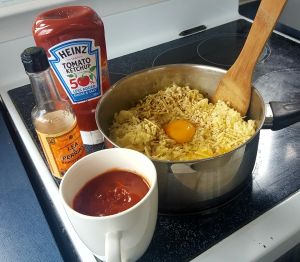
You need about 3 cups of grated tasty cheddar cheese. (fresh parmesan is my substitute in Montevideo – tasty cheddar’s difficult to find there) A large egg (or two small as in my pic). 1/4 cup each of tomato sauce/ketchup and worcester sauce. An egg-sized piece of butter – definitely not margarine, the result would be too horrible to contemplate. These quantities are estimates only, and the photos will help you judge if you’re on the right track. Also, while the first photo doesn’t show the melted butter, it was there under the cheese, believe me.

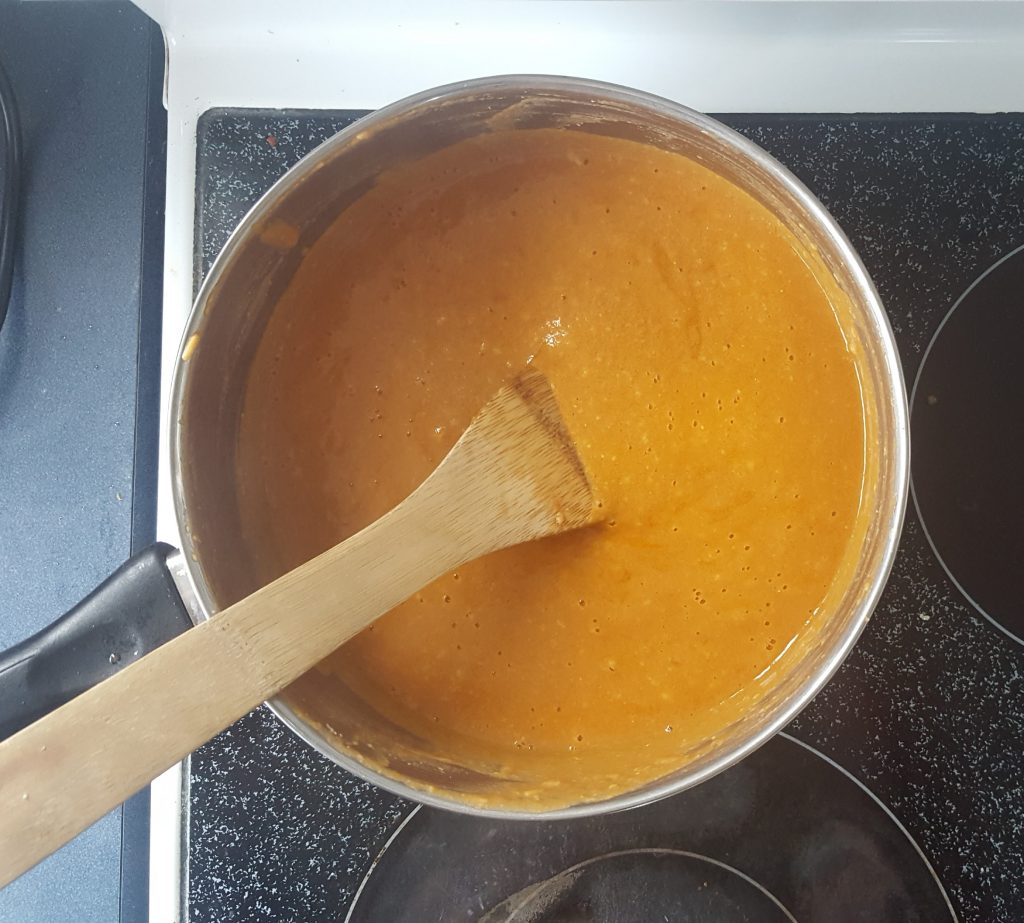
Heat at all the ingredients, carefully stirring all constantly until it all looks like the pic above. Remove and cool before using. The mixture keeps in the frig for a few days, and can be frozen until later.

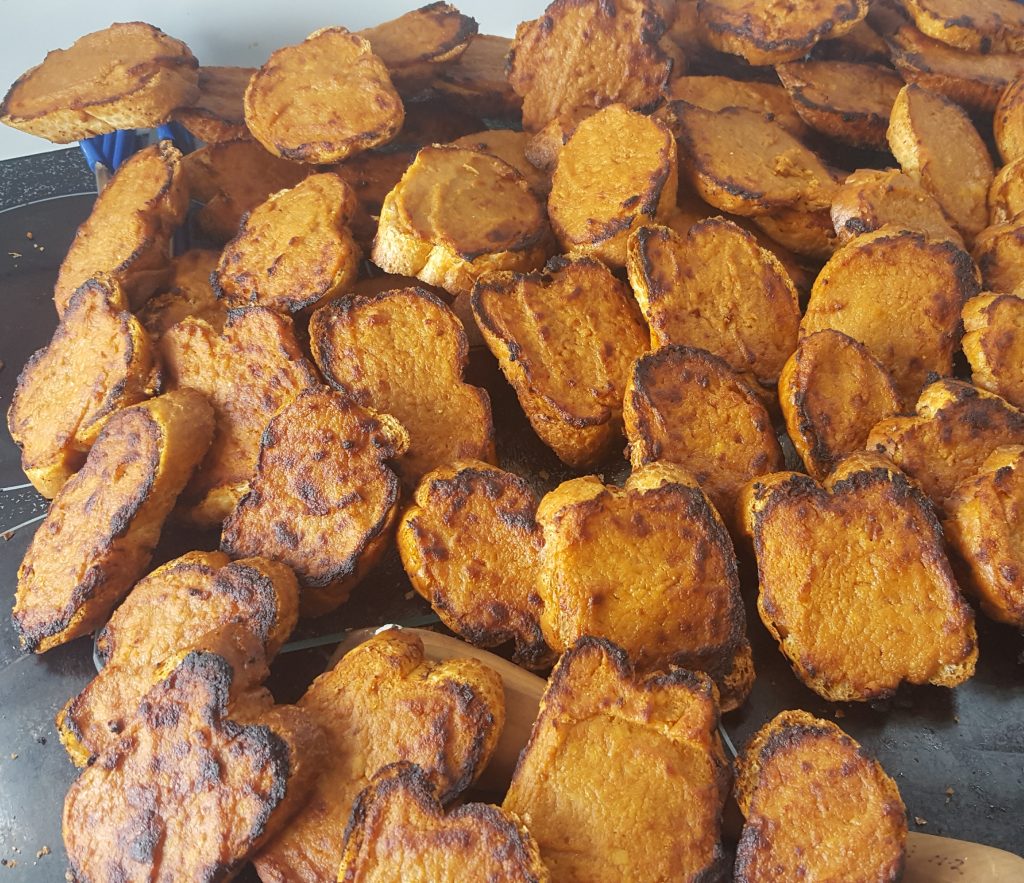
Slice some day old bread and spread the mixture on the bits, being careful to go out to the edges. Put on an oven sheet and bake in a medium-hot oven until they are well cooked, looking a little dark but not burned at the edges – see photo below. They’re still pretty yummy if they a bit darker red-brown than my pic – it’s a pretty forgiving recipe.

As pictured below, I sliced a baguette, but the bread shape is your choice. Mum used to get the bread sliced at some tearoom place that would slice loaves for customers as mentioned in a previous post, where I also mentioned that in my youth, triangles were somehow more ‘fancy’ than mere squares or rectangles. For really special occasions, Mum would then use a round cookie cutter to produce bread circles, and she always added some finely chopped bacon on top; but that all seems a little cholesterolly excessive these days, so I don’t add that. Hot or cold, with or without soup and/or salad, in picnic baskets, in a brunch or as a snack with later afternoon drinkies with friends, these savouries are perfectly multi uso.

You keep putting the cheese mix onto bread slices until you run out of one or the other. If you have bread left, you can make breadcrumbs or put it in bread and butter custard. If you have mixture left, either freeze it or use by putting a scrape on celery sticks for a snack. It also keeps a few days in the frig, and goes well on dry toast or crackers. The cooked pieces freeze really well, too.

If the pics are different sizes and don’t line up properly when you read this, all I can say is it’s someone else’s computer 😉 and it’s taken rather longer than usual to write. However, we’re within a day or two of heading back to Montevideo from Australia and New Zealand, and the quality will improve !

Christmas Dinner Fiasco

We spent  a recent evening in Perth WA catching up over dinner and drinks with cousin Andrew and his wife Kate.  In the course of the evening we got to the topic of the Family Christmas Dinner, and for the first time I heard of an apparently memorable one in 1982, which we missed for some reason.

At this time of year between Thanksgiving and Christmas, on social media Americans share their baked turkey disasters, and this one ranks well up there with the most dramatic, though a Fire Brigade Finale was averted.

I am sure that when I was young, and for all the years until I married and spent some Christmases away from the family seat, we never had turkey, but nearly always had a goose.  Looking back, that is now a very English choice, but over my lifetime Aussies’ tastes have moved a long way from traditional English food; a phenomenon I’ll write more about another day.

I’m sure, then, that Mum was not an experienced turkey chef, but the rest of the family would have contained a few confident experts, and I’m sure I could pick who they were…

As the main baked dish it was natural the bird would go in Mum’s oven.  Everyone would have provided a major item of the menu, which was planned to be assembled and eaten at #6.   Everyone was bid for  the usual time, noonish, with the expectation of Christmas Dinner being served at somewhere around 2pm.  I gather all was well in hand and seemingly on schedule, when someone realised the turkey was not in the oven, and that in fact it hadn’t even been thawed!  I can only assume that by this time a couple of pre-lunch drinks had been enjoyed by all, because someone believed it could be thawed in hot water, meaning dinner would just have to be delayed a bit.  It was placed in the laundry tub of hot water.  After an hour and a half, sufficient of the outside of the frozen turkey flesh was soft to the touch, and so some expert deemed it ready to cook.  By 2.45 the turkey was in a baking dish, covered with a large brown paper bag and loaded into a fairly hot oven.  Neither Andrew nor Kate remembered which expert recommended the paper bag, or why …   But anyway, more drinks were served,  and bowls of festive mixed nuts were spread around to nibble on while everyone waited.

At around 5pm, smoke coming from the kitchen alerted all to the fire in the oven. Someone grabbed the baking dish+turkey and rushed to the laundry tub around the corner from the kitchen, and dunked the turkey back into the water that handily remained from the thawing process hours earlier!

I gather everyone had a little sliced turkey with the veggies and gravy, but it must have all been a bit peculiar, and I’m really sorry we missed it.  I’m certain Kate and Andrew weren’t making this up, though most other likely protagonists in that tale have passed away, sadly leaving it unable to be corroborated.  Ro and John feel they must have been present,  but don’t remember the more spectacular details.

The takeaways from this account then are (1) that turkey is best left to Americans and even then they sometimes get it wrong, (2) if you must have turkey make sure it thaws properly in the frig for 2-3 days before cooking, and (3) skip the brown paper.

Have you decided yet what you’re having for this year’s Christmas dinner?

Asparagus Rolls

In March 1954 our family moved house, from Trevallyn to East Launceston, a great event that coincided with the young Queen Elizabeth II’s arrival in Tasmania on her Commonwealth Coronation  Tour, about which I’ll write more another time.

Our first spring in the Bifrons Court house saw a 1m x 1m patch of the garden produce fine shoots of what we learned were asparagus

According to a discussion with cousin Don a couple of weeks ago, it should be cut at least daily to encourage growth; and the season in Launceston lasts 6-8 weeks in September-October.  It then goes to seed and looks like some fluffy ferny thing for a while before it dies off, falls down and disappears until the next season.  Late father-in-law Helmut, a German, told us that in his part of Europe the season was shorter, and generally people ate fresh green spears with mashed potato and ham while the short season lasted.  Looking in vain online for a free photo to use, I was reminded of how useful fresh spears are, lending themselves to being wrapped in various sliced foods like non-crumbly cheeses, prosciutto and other preserved meats.  They can be topped with, and dipped into, lots of tasty, dippy things. The uses of asparagus is apparently limited only by your imagination, with a lot of potential I realise I have ignored too long.

As I said, up until we moved into our new house, my  main acquaintance with asparagus was tinned, and more often via asparagus rolls.  I had forgotten these until our talk with Don, as I haven’t seen them for years.  Very thinly sliced fresh bread is lightly buttered with softened butter, and the crusts removed. On each slice a spear is laid diagonally just short of corner to corner, it’s rolled up and secured with a toothpick.   These rolls are arranged on a serving plate, covered with a clean damp cloth, and placed in the frig for a couple of hours, then removed just before serving.  It was one of Mum’s standard supper table items for card nights, and just sometimes for picnics.  As very thin sliced bread is available where I live in Montevideo, they will definitely be on the menu for my next mahjong day!